


Fashion Fakes-understanding the choice of designer-like alternatives

In the ever-evolving world of fashion, the allure of designer items versus their less costly counterparts—fashion dupes—has captivated consumers worldwide. Understanding the psychological elements behind these purchasing decisions can provide valuable insights into our own behavior. In this article, we explore how various factors influence our fashion choices and how the subtle art of persuasion steers us towards certain products.
The Art of Creating Value
Fashion is not just about clothing; it's a complex industry that thrives on the creation of perceived value. This value is amplified through several factors:
Psychological (internal drivers such as your beliefs, attitudes, emotions, motivations, learning experiences, and perceptions)
Social (influences from your social environment, such as your family, friends, and the cultural norms and values of your community)
Cultural Factors (broader cultural beliefs and societal trends shape your perceptions and the products you find desirable or acceptable)
Personal Factors (individual circumstances like your age, occupation, lifestyle, economic status, and personal values all affect what, when, and how you buy)
Economic Factors (the overall economic climate, along with the price and perceived value of a product, directly impacts your ability and willingness to make a purchase)
Marketing and Environmental Factors (product, price, place, promotion)
These all contribute to every person's decision-making, so being aware of them is important.
Understanding Consumer Motivations
Consumers are complex beings driven by a myriad of motivations. My job as a stylist is to understand motivation and match it to what my client wants to achieve. For every person this will be completely different. 'Do they want to feel LESS overwhelmed by options in the wardrobe in the morning?' than maybe shopping isnt the right solution for them. Or 'Does how they want to be precieved' show-up as tools in their existing wardrobe? If not, than maybe its needs to be added. Most consumer needs (the psychology of shopping) comes to supporting 5 core areas:
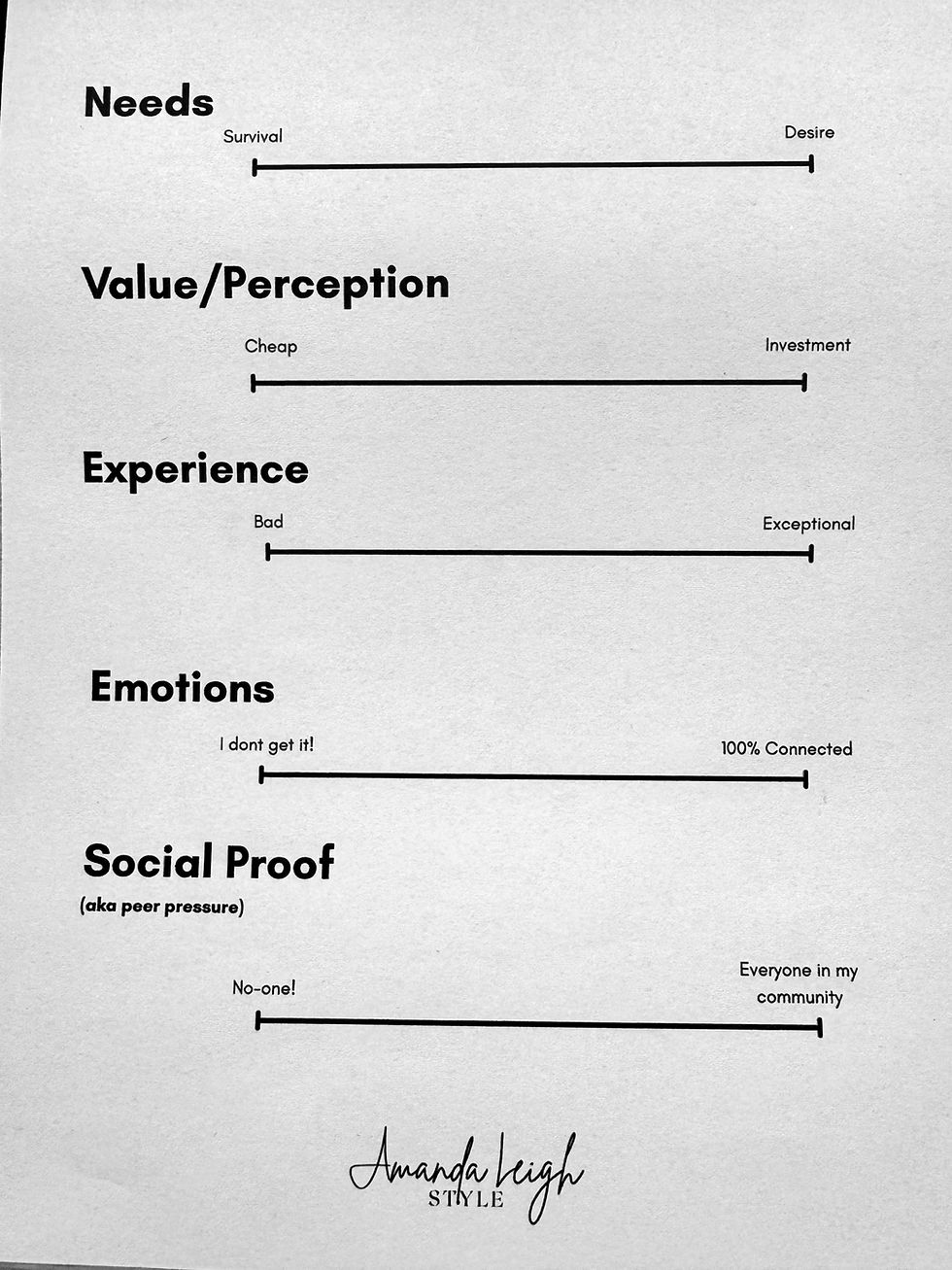
Needs: From basic survival needs to the desire for status and prestige, our motivations vary across a spectrum. Maslow's hierarchy of needs can be applied to understand these motivations, from clothing as a basic necessity to a symbol of self-actualization.
Perception: The perceived value of an item, whether a luxury brand or a dupe, influences buying behaviour. This perception is often shaped by marketing strategies and personal experiences.
Habit Formation: Positive past experiences with a brand or product can lead to habitual purchasing. Brands that consistently deliver quality and satisfaction build loyal customer bases.
Emotional Connect-ability: Emotional connections to a brand can be powerful motivators. Whether it's nostalgia, aspiration, or identity, these connections can significantly influence decision-making.
Social Proof: The opinions and behaviors of others often guide our choices. Seeing peers or influencers endorse a product can validate our decision to purchase.
All of these areas can have an influence on a purchasers motivation to buy (or not).
As an example let's look at one area of the fashion market that has had a huge focus when it comes to dupes vs. Designer, Handbags!
Designer Handbags vs. Fashion Dupes
When it comes to handbags, the distinction between designer items and dupes is particularly pronounced.
There is a clear difference between Dupe, Counterfeit and Fake, even though these terms are often interchangeable. A counterfeit handbag will directly copy a brand/bag trying to sell it to you like the original. It is Illegal, and infringes on trademarks to try to deceive a consumer. A dupe bag, on the other hand is legal and can be sold and mainstream retailers as long as it doesn't have logos. It may resemble or be inspired by the original design but must be at least 10% different or not complete with an existing patent on the product.
Fashion dupes offer similar aesthetics and often function, at a fraction of the cost. While they may lack the prestige and quality of the original, they cater to consumers seeking trendy styles without the financial commitment/investment. The dupe market thrives on its ability to replicate high-end designs, making fashion accessible to a broader audience.
The dupe market also doesn't have the marketing costs.
According to a 2022 report by the Business of Fashion, the global market for fashion dupes grew by 15% over the previous year, highlighting their increasing popularity among budget-conscious consumers. This trend underscores a shift in consumer priorities, where style and affordability often outweigh brand allegiance.
Moreover, the rise of social media platforms has played a significant role in the popularity of fashion dupes. Influencers and fashion bloggers frequently showcase dupes as viable alternatives to expensive designer pieces, offering styling tips and comparisons that demystify the allure of luxury brands. This democratisation of fashion allows consumers to express their personal style without feeling constrained by financial barriers.
Interestingly, the ethical considerations surrounding fashion dupes also contribute to the ongoing debate. While some argue that dupes infringe on intellectual property rights and undermine the creative efforts of designers, others contend that they foster inclusivity in fashion by challenging traditional norms and making high fashion accessible to all.
Ultimately, the choice between designer handbags and fashion dupes reflects individual values and circumstances. For some, the investment in a designer piece is worth the sense of luxury and exclusivity it brings. For others, the appeal lies in the ability to stay fashionable and financially prudent. As this dynamic landscape continues to evolve, it remains clear that both designer and dupe markets will coexist, each catering to different facets of consumer desire and identity.

The Psychology of Choice
In conclusion, the choice between designer items and fashion dupes is ultimately influenced by a complex interplay of psychological, social, and economic factors. Understanding these motivations can empower consumers to make informed decisions aligned with their values and needs.
As you reflect on your fashion choices, consider what drives your decisions. Are you motivated by status, self-expression, or practicality? How do societal influences shape your perceptions? I invite you to share your thoughts in the comments below. Let's explore the fascinating world of fashion psychology together and engage in a meaningful discussion on how these insights can shape our future choices.


Comments